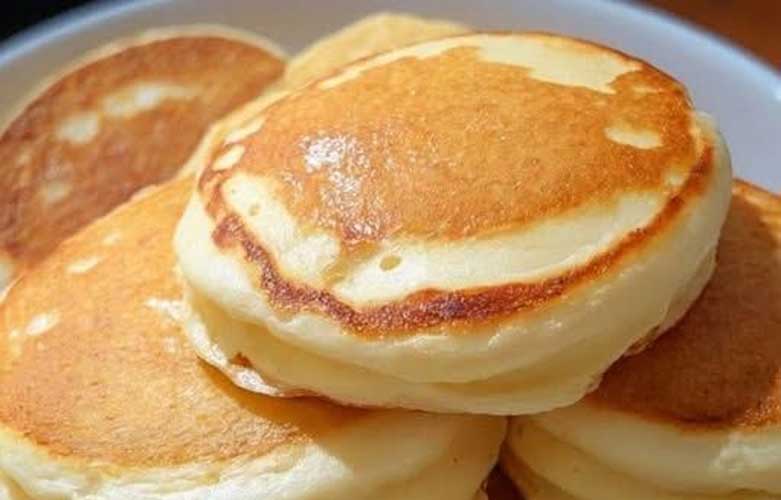
There are mornings that stay with you forever. Not because they were fancy or planned, but because they felt safe. For me, pancakes mean those slow mornings when time did not rush me. The kitchen was quiet. The light came in soft through the window. A bowl sat on the counter. Flour dusted the air. The smell of warm batter on a hot pan filled the room and wrapped everything in comfort.
This recipe takes me back to weekends when breakfast was not a task. It was a moment. Someone I loved stood by the stove, flipping pancakes with patience. I watched closely, waiting for the bubbles to rise. That was the sign. That was the magic. When the edges set and the center stayed tender, you knew something good was about to happen.
I still make these fluffy pancakes when I need that feeling again. When life feels loud. When mornings feel rushed. When I want to slow things down and cook with care. This is not just an easy pancake recipe. It is a pause. It is warmth on a plate. It is comfort food that asks you to stay at the table a little longer.
If you have ever chased the perfect fluffy pancake and ended up with flat or dense results, you are not alone. I have been there too. This recipe grew from many tries. Some were too dry. Some too thin. Some tasted fine but did not feel right. Over time, I learned what truly matters. Small details. Gentle mixing. The right balance of leavening. Heat control.
I am writing this like I would explain it to a close friend. No rushing. No secrets. Every step matters. You can make bakery-style pancakes at home. You do not need fancy tools. You do not need rare ingredients. You just need to understand what the batter wants and how the pan should feel.
These fluffy pancakes turn out soft inside with a light golden surface. They rise beautifully. They hold butter without collapsing. They soak up syrup in the best way. This is the kind of breakfast recipe that becomes part of your routine. Once you master it, you will come back to it again and again.
Why This Fluffy Pancake Recipe Works
This recipe focuses on balance. The flour gives structure. The eggs give strength and richness. The milk brings moisture. The baking powder and baking soda work together to create lift. Sugar adds a gentle sweetness and helps with browning.
Many pancake recipes fail because they push one element too far. Too much liquid leads to spreading. Too much flour creates heaviness. Too much mixing kills the rise. This recipe avoids those traps.
It also respects timing. Pancake batter does not like to be rushed, yet it does not want to sit too long. When you treat it right, it rewards you with thick, airy pancakes that feel light but satisfying.
Ingredients for Fluffy Pancakes
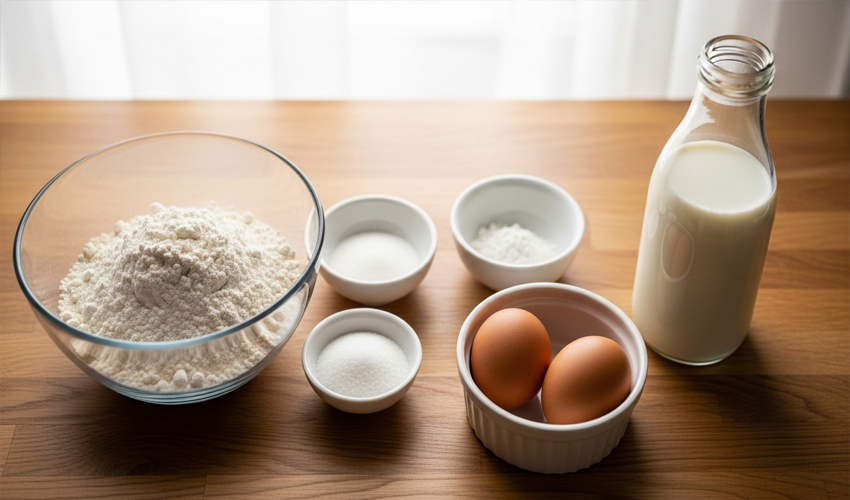
- 2 cups all-purpose flour
- 2 tablespoons sugar
- 2 teaspoons baking powder
- 1/2 teaspoon baking soda
- 2 large eggs
- 1 1/2 cups milk
These are pantry staples. That is part of the beauty. You can wake up and decide to make pancakes without planning ahead. Still, each ingredient plays a clear role. Changing one affects the final texture and taste.
Ingredient Breakdown and What Each One Does
All-purpose flour gives the pancakes their shape. It provides enough protein to hold the rise without turning tough. Using bread flour makes pancakes chewy. Using cake flour makes them fragile. Stick with all-purpose for best results.
Sugar does more than sweeten. It helps the pancakes brown and adds a gentle tenderness. Too much sugar leads to burning before the center cooks. This amount keeps things balanced.
Baking powder is the main lifting force. It creates bubbles as soon as it hits liquid and heat. Fresh baking powder matters. Old powder leads to flat pancakes.
Baking soda supports the lift and improves color. It works with the natural acidity of the batter. A small amount is enough. More than that adds bitterness.
Eggs bind everything together. They add richness and strength. Room temperature eggs mix more smoothly and help with even cooking.
Milk hydrates the flour and creates a pourable batter. Whole milk gives the softest result. Lower fat milk works but changes mouthfeel slightly.
Step-by-Step Instructions for Perfect Fluffy Pancakes
This is the heart of the recipe. Pancakes look simple, yet small choices change everything. Read this section like you are standing beside me in the kitchen. I will tell you what to look for, what to feel, and what to avoid.
Step 1: Prepare Your Dry Ingredients
Take a large mixing bowl. Give yourself space. Pancake batter needs room to breathe.
- Add the all-purpose flour to the bowl.
- Add the sugar.
- Add the baking powder.
- Add the baking soda.
Whisk these dry ingredients together until they look evenly mixed. You should not see streaks of white powder or clumps. This step spreads the leavening evenly, which helps every pancake rise the same way.
If you skip proper mixing here, some pancakes will puff while others stay flat. This is a common mistake.
Step 2: Mix the Wet Ingredients Separately
In a second bowl, crack the eggs. Beat them gently until the yolks and whites blend fully.
- Add the milk to the eggs.
- Whisk until smooth and pale.
This step creates a uniform liquid. Adding eggs directly to dry flour can lead to uneven mixing. A smooth liquid makes a smoother batter.
If your milk is cold, let it sit for a few minutes. Cold liquid slows down the leavening reaction.
Step 3: Combine Wet and Dry Ingredients
Pour the wet mixture into the bowl with the dry ingredients.
Use a spatula or wooden spoon. Stir gently. Do not rush.
- Mix just until the flour disappears.
- Stop when the batter looks thick but pourable.
The batter should look slightly lumpy. That is good. Smooth batter often means overmixed batter.
Overmixing develops gluten. Gluten makes bread chewy. Pancakes should be soft.
What the Batter Should Look Like
Your batter should slowly drip from the spoon. It should not run like water. It should not sit like dough.
If it feels too thick, add one tablespoon of milk at a time. Stir gently. If it feels too thin, add a small spoon of flour and fold lightly.
Step 4: Let the Batter Rest
Let the batter sit for 5 to 10 minutes.
This rest matters. It allows the flour to absorb liquid. It allows bubbles to form. It leads to thicker, taller pancakes.
Do not stir again after resting. Stirring knocks out the air you just created.
Step 5: Heat the Pan Correctly
Place a nonstick pan or griddle over medium heat.
Let it warm fully. This takes patience.
Test the heat by dropping a small bit of batter onto the surface. It should sizzle softly, not loudly. If it browns too fast, lower the heat. If it sits pale, raise it slightly.
Heat control is the difference between golden pancakes and burnt outsides with raw centers.
Step 6: Cook the Pancakes
Lightly grease the pan if needed.
- Pour about 1/4 cup of batter for each pancake.
- Do not spread the batter.
Let the pancake cook undisturbed.
Watch for bubbles on the surface. They will appear first near the edges, then move inward.
When bubbles pop and leave small holes that do not fill back in, the pancake is ready to flip.
Step 7: Flip with Confidence
Slide the spatula fully underneath. Flip once. Do not press down.
The second side cooks faster. About 1 to 2 minutes is enough.
The pancake should feel light when lifted. The surface should be evenly golden.
Common Pancake Problems and How to Fix Them
Pancakes are flat. Your leavening may be old. You may have overmixed the batter.
Pancakes are raw inside. The pan is too hot. Lower the heat and cook slower.
Pancakes are tough. You stirred too much or pressed them while cooking.
Pancakes stick. The pan is not hot enough or not properly greased.
Pro Tips for Fluffy Pancakes That Rise Every Time
This section is where small changes bring big rewards. These tips come from trial, failure, and many quiet mornings at the stove. Use them when you want pancakes that feel soft, tall, and steady from the first batch to the last.
Pro Tip 1: Respect the Batter
Pancake batter is delicate. Once the wet and dry ingredients meet, air begins to form. That air gives you lift.
- Stir slowly.
- Stop early.
- Leave small lumps.
If you chase a smooth batter, you lose height. Thick and slightly uneven batter cooks into fluffy pancakes.
Pro Tip 2: Control the Heat, Not the Clock
Time matters less than temperature. Pancakes need steady heat.
- Medium heat works best.
- Lower the heat after the first batch.
Pans heat up as you cook. What worked for the first pancake may burn the fifth. Adjust as you go.
Pro Tip 3: Use Fresh Leavening
Baking powder and baking soda lose strength over time.
If your pancakes stay flat even with proper mixing, test your baking powder. Add a pinch to warm water. It should bubble fast.
Fresh leavening leads to tall pancakes with a light crumb.
Pro Tip 4: Portion with Care
Use a measuring cup or scoop.
Even portions cook evenly. This gives you better texture and a clean stack on the plate.
Tips for the Best Fluffy Pancakes
Tip 1: Let the Batter Rest
A short rest improves structure.
Five to ten minutes allows the flour to hydrate. It also supports better rise on the pan.
Tip 2: Flip Once Only
Each flip releases air.
Wait for bubbles. Flip with confidence. Leave it alone after that.
Tip 3: Keep Cooked Pancakes Warm
Place finished pancakes on a plate. Cover lightly with foil.
This keeps them warm without trapping steam, which can soften the surface too much.
Ingredient Notes That Make a Difference
All-Purpose Flour
Stick with standard all-purpose flour.
Whole wheat flour adds density. If you use it, replace only one quarter of the flour. Add a splash of milk to keep the batter loose.
Sugar
Sugar affects browning.
Lowering the sugar leads to pale pancakes. Raising it leads to fast browning and undercooked centers.
This amount keeps balance.
Eggs
Large eggs bring structure.
If your eggs are small, add one extra tablespoon of milk to keep moisture steady.
Milk
Whole milk gives the softest result.
Low-fat milk works. The texture feels lighter and less rich.
Plant-based milk also works. Choose unsweetened options to control flavor.
Equipment Notes
Best Pan for Pancakes
A nonstick pan or flat griddle works best.
Cast iron also works if well seasoned and preheated evenly.
Spatula Choice
Use a wide, thin spatula.
This helps you flip cleanly without tearing the pancake.
Measuring Tools
Measuring cups improve consistency.
Eyeballing portions leads to uneven cooking.
Flavor Variations to Try
Once you master the base recipe, you can explore.
- Add vanilla extract to the wet ingredients.
- Fold in chocolate chips after mixing.
- Add fresh berries on top after pouring the batter.
These changes keep the structure intact while adding flavor.
Serving Ideas That Make Pancakes Feel Special
Fluffy pancakes do not need much. Still, how you serve them can change the whole experience.
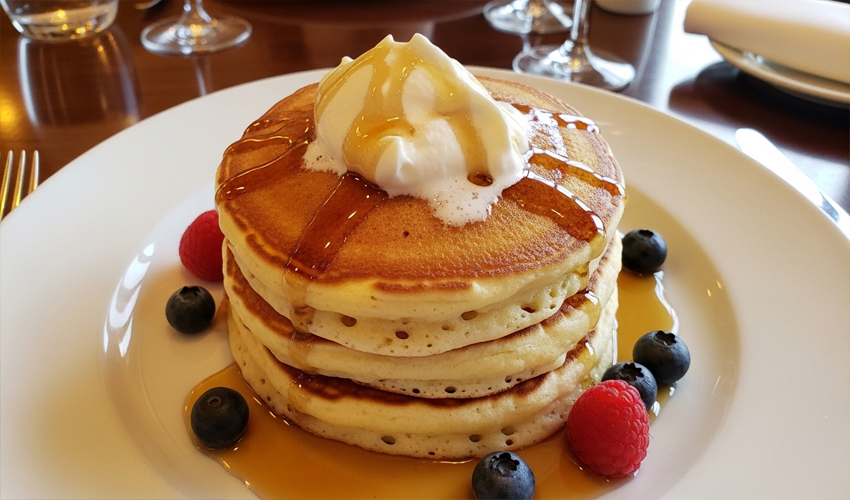
Serve them hot. Stack them gently. Let steam rise as you bring the plate to the table.
- Butter that melts slowly on top.
- Warm maple syrup poured just before eating.
- Fresh fruit on the side for contrast.
If you want something richer, add a spoon of whipped cream or a drizzle of honey. Keep it simple. Let the pancakes stay the focus.
Making Pancakes with People You Love
This recipe shines when shared.
Invite someone into the kitchen. Let them pour the batter. Let them watch for bubbles. Pancakes are forgiving. They welcome learning hands.
Kids love this recipe because they can see the change happen. Batter turns to cake. Flat turns to tall. It builds confidence.
These are the mornings people remember. Not because of perfection, but because you were present.
Final Thoughts on This Fluffy Pancake Recipe
This recipe gives you control. Once you understand the batter and the heat, you are free to adjust.
You can make thicker pancakes by resting longer. You can make thinner ones by adding a splash of milk. You can add flavors once you trust the base.
Do not chase perfection. Chase comfort. Pancakes are meant to feel good, not stressful.
Cook them often. Make them yours.
Frequently Asked Questions
Why are my pancakes not fluffy?
This usually comes from overmixing or weak leavening.
Mix less. Check your baking powder. Let the batter rest before cooking.
Can I make the batter ahead of time?
Pancake batter works best fresh.
If you must prepare it early, mix the dry and wet ingredients separately. Combine them just before cooking.
Can I freeze cooked pancakes?
Yes.
Let them cool fully. Stack with parchment between each pancake. Freeze in a sealed bag.
Reheat in a pan or toaster until warm.
How do I know when to flip?
Look for bubbles.
When bubbles pop and leave small holes that stay open, it is time.
Can I double this recipe?
Yes.
Use a large bowl. Mix gently. Cook in batches to keep heat steady.
A Final Invitation
The next time you need a slow morning, reach for this recipe.
Let the pan heat. Let the batter rest. Let yourself enjoy the process.
If you try a variation or make it with someone special, keep that moment. That is the real reward.